Every site is different.The paperwork isn’t.

What you run in the field

Pre-Job Analyzer

Ratings come off a photograph of the nameplate instead of being typed from the top of a ladder, and coordination-study PDFs are read for the devices and trip settings they contain. Afterwards the results are reconciled against the drawing and the study, matched even where the three sources spell the same device differently.
Plan

Safety and permit documents

Job hazard analyses, pre-task plans and lockout/tagout procedures built to the OSHA sections that govern them, 29 CFR 1910 and 1910.147. The lockout plan names every energy source present, including the stored spring energy that gets left out when only the obvious ones are written down.

Electrical testing forms

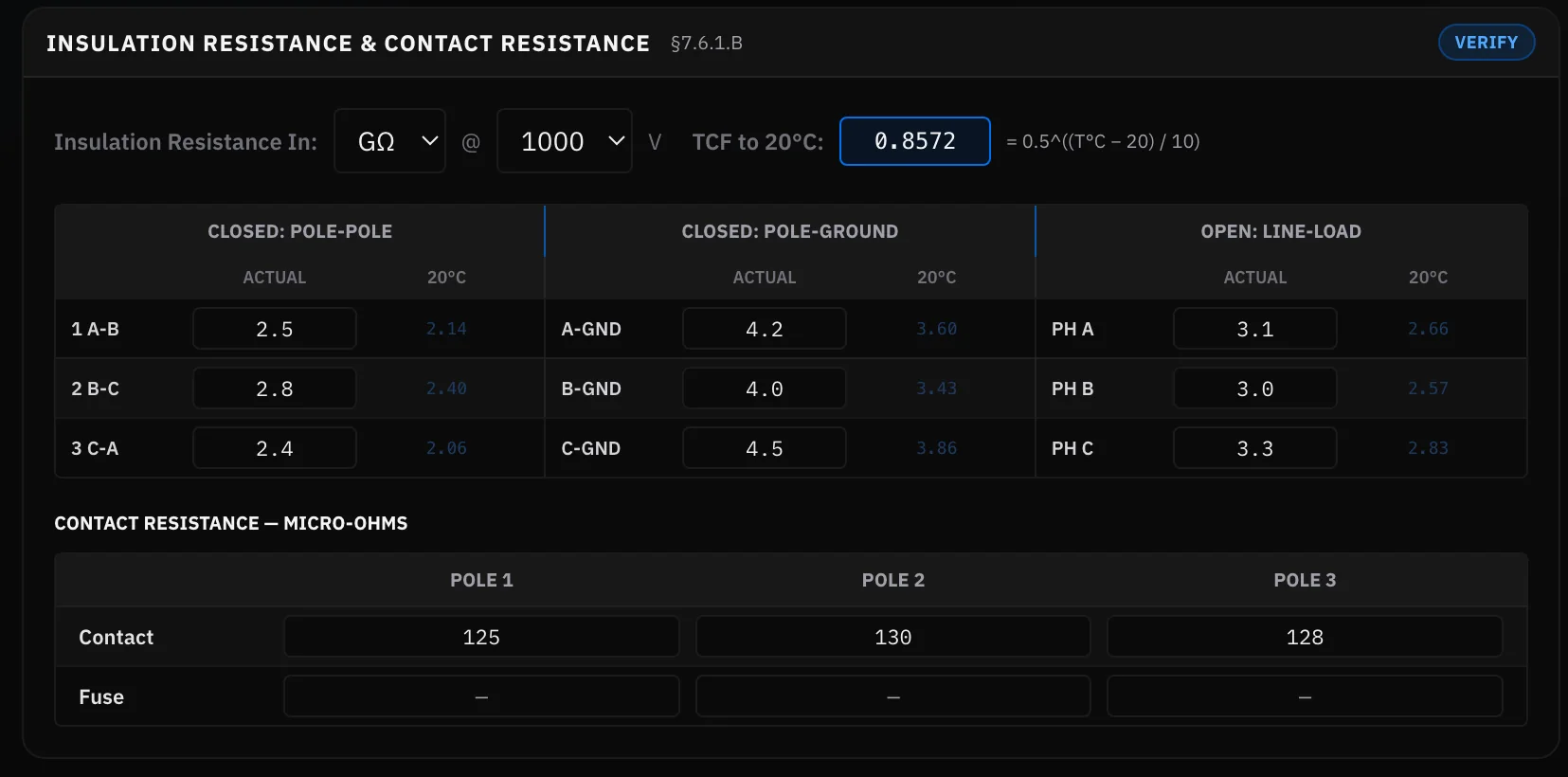
Transformers, breakers, relays, cable, CTs and switchgear, each form carrying the ANSI/NETA ATS-2021 clause it satisfies. Insulation resistance is corrected to 20 °C with the correction factor and the formula it came from shown on the record itself, and contact resistance is held in micro-ohms per pole.

Test

Multi-device jobs

Queue a whole lineup at once and work down it. Drafts sync to the cloud, so the tablet in the field and the laptop in the truck are the same job, and a device that dies mid-shift does not take the shift's readings with it.

Coordination charts

Manufacturer curves plotted against the settings you actually tested, on log-log axes against each breaker's tolerance band: the manufacturer's published band where one is on file, otherwise a labelled fallback. Miscoordination between a feeder and the device above it becomes visible before the report goes out, rather than after an outage has demonstrated it.

Report

The signed report

Out as a branded PDF under your company's name, never ours, and as PowerDB-compatible CSV written with the tag names PowerDB expects. Nothing downloads until the fields that make the document mean something have been filled in.

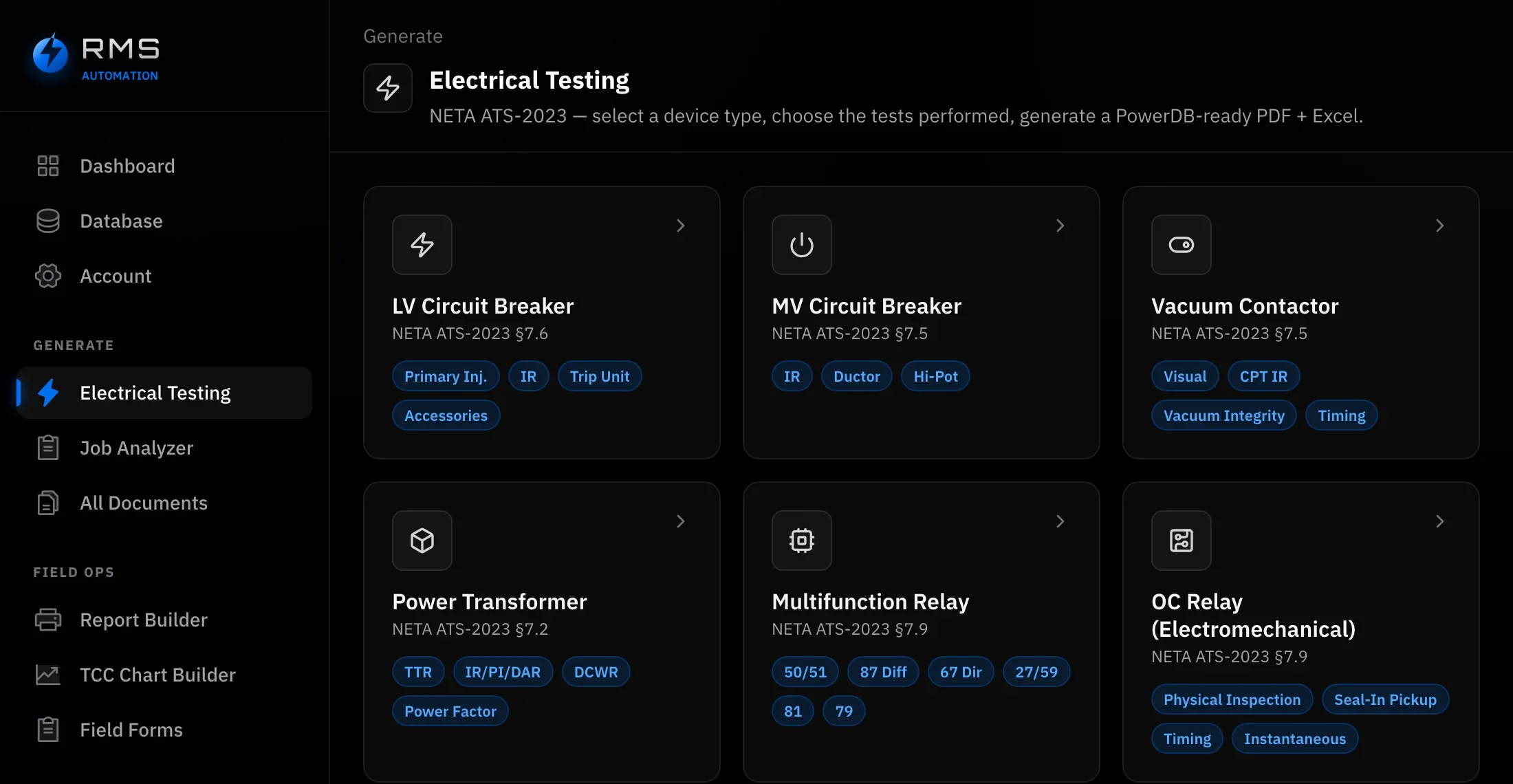
The RMS Automation app, on the electrical testing screen: a grid of device cards (LV circuit breaker, MV circuit breaker, vacuum contactor, power transformer, multifunction relay, overcurrent relay), each labelled with a NETA section and the tests it covers.
Detail of a low-voltage breaker record: insulation resistance readings pole-to-pole, pole-to-ground and line-to-load, each corrected to 20 degrees Celsius, above a contact resistance table in micro-ohms.
The application as deployed: the NETA device library, and one breaker's insulation-resistance record

What your security office will ask for

Identity & access

  • Single sign-on: SAML 2.0Okta, Microsoft Entra ID, Google Workspace, or any SAML 2.0 provider. Access follows your directory, so a technician who loses their badge loses the application in the same action.
  • Directory sync, SCIM 2.0Accounts and groups provision and deprovision automatically. No standing list of who still has a login, kept by hand, discovered to be wrong during an audit.
  • Multi-factor authenticationEnforced per organization, or delegated to your identity provider where SSO is in place.
  • Role-based access controlPermissions by role rather than by account (field technician, reviewer, approver, administrator) so signing authority is a property of the role and is auditable as one.
  • Scoped API keysIntegration credentials are issued per system and per permission, not per person, and carry only the access that integration needs.
  • Immediate revocationWithdrawing access ends live sessions, not just future logins. Offboarding takes effect at the moment it is performed.

Data protection

  • Tenant isolation in the databaseRow-level security in PostgreSQL. One organization cannot read another's records even if application code asks it to. The boundary is enforced below the application, where a bug in the application cannot cross it.
  • Encryption in transit and at restTLS 1.3 with AES-256-GCM on every connection, HSTS preloaded, and encrypted storage and backups.
  • Write-once test records, NERC CIPSigned reports and their audit trail are stored immutably with a defined retention period, so a commissioning record produced years ago is the record that is produced years later.
  • Point-in-time recoveryContinuous backup with a documented recovery point and recovery time objective, both stated in writing during scoping rather than described in general terms.
  • Zero data retention on AI featuresContent sent to the analysis models is not retained by the model provider and is never used for training. Your job data does not become somebody's corpus.
  • Documented disposalDefined deletion on request and on termination, covering backups, with written confirmation of what was removed and when.

What we can show you

Examined

  • SOC 2 Type IIIndependently examined over an observation window, not a self-assessment. Report available under NDA.
  • Independent penetration testThird-party testing against the production stack, with the report and the remediation status shared during vendor review.

Enforced

  • Continuous security testingStatic analysis, dependency auditing, dynamic scanning and a CycloneDX software bill of materials run on every change, and a failing check blocks the release.
  • Published operational historyA public status page with per-component uptime, measured from outside our own hosting so an outage cannot report itself as healthy.

Signed

  • Contractual terms that exist alreadyMaster services agreement, data processing addendum and, where the operation warrants it, a service level agreement.
  • Stated data residencyWhere your data is processed and stored, named by region, in writing.
  • SOC 2 Type II
  • SAML 2.0
  • SCIM 2.0
  • NERC CIP-004 / CIP-011
  • TLS 1.3
  • GDPR
  • CCPA
  • CycloneDX SBOM
  • ANSI/NETA ATS-2021
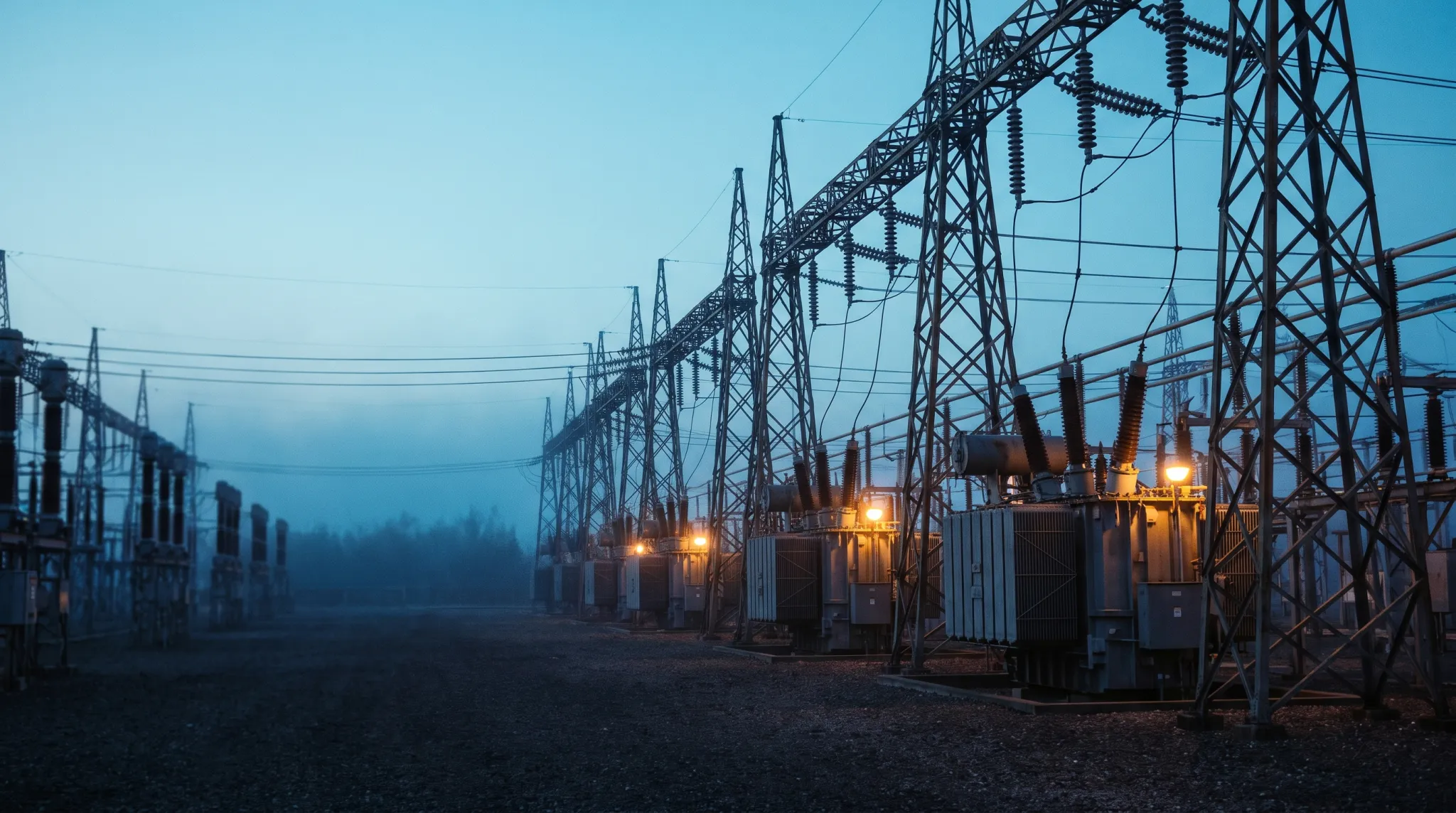
A high-voltage utility substation at dusk, transmission towers and power transformers receding into haze.

Where engineering meets precision.

Utilities · EPC Contractors · Industrial Facilities · Multi-Site Organizations · Government Infrastructure

Contact Sales